
What species are best for my growing conditions?
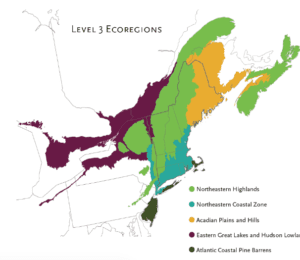 Native Plant Trust Garden Plant Finder -authoritative for New England and regularly updated. Search by ecoregion, types, growing conditions, a host of other plant characteristics including the specific ecological value of the plant. Includes images.
Select plants native to our ecoregion (# 59 – Northeast Coastal Zone) and straight species vs. cultivars or specimen for their ecological contribution to your landscape.

URI, RI Native Plant Guide — searchable database of plants native to Rhode Island based on 1,300 of Rhode Islands native plants selected for their ornamental value, potential for use in restoration projects and ease of propagation.
RIWPS also offers Cultivation Notes on a variety of plants.
Ecological gardening is important
• Learn more about the ECOLOGICAL APPROACH from our partner organization Grown Native Massachusetts. Check out all their resources! Aspetuck Land Trust in Ct also offers numerous valuable resources.
• Not sure ecological gardening is important? See Doug Tallamy’s online lecture Nature’s Best Hope based on his book with the same name. Excellent resource that offers many arguments and supporting research for the importance of “ecological gardening”.
Fall ecological gardening practices
• Comprehensive Guide. All the steps you can take and how and why to do them from Xerces Society
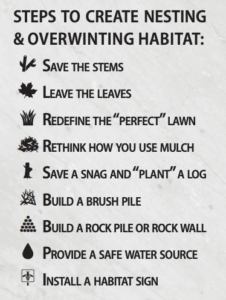
• Also from Xerces Put Down Those Pruners: Pollinators Need Your ‘Garden Garbage! or Leave the Leaves both by Justin Wheeler
Starting native plants from seeds
Sexual reproduction – through seeds – creates variation between individual plants, as any single plant adapts differently in its ability to cope with environmental stress such as heat, drought, flooding and other disturbances. Genetic variation is a species’ best strategy for adapting to future environmental conditions. Seed propagation maintains the genetic diversity. To preserve the biodiversity of our habitats use seeds from straight (vs cultivar, nativar or hybrid) RI native plant species, sources as locally as possible.
Saving Seed and Sowing with RIPWS Seed Starters
General Guidelines – from seeds sprouting to planting in the ground
Get your questions answered
The URI Gardening and Environmental Hotline is staffed by trained URI Master Gardeners who are available in person, by phone and via email to help you identify plants and troubleshoot problems in the garden. Snap a photo with your smartphone and send it to gardener@uri.edu, or call (401) 874-4836 to speak to someone directly. Need a free pH soil test? Pop in at the URI Mallon Outreach Center to see us during hotline hours (Monday – Thursday from 9AM – 2PM).
Plants for Pollinators & Biodiversity

Which plants support the most butterflies, moths, birds and other forms of wildlife?
Doug Tallamy has championed how native plants support biodiversity as well as proposing very specific steps for maximizing the impact of individual landscapes to restore and maintain larger functioning ecosystems.
Tallamy’s books, articles, videos can be found on HOMEGROWN NATIONAL PARK, a grassroots call-to-action to restore biodiversity and ecosytem functions. Many additional resources. Add your landscape to this effort. Put yourself on the map!
 The National Wildlife Federation Native Plant Guide
Listing of native plants that attract the highest numbers of butterflies and moths to feed birds and other wildlife where you live. Just put in your zip code.
 Audubon Society Native Plant Database
Search by zip code, type of plant, type of bird. Includes images of birds.
 RIDEM detailed pdfs on Butterflies of Rhode Island and the Wild Bees of Rhode Island.
Includes information about the value of specific native plant species for them.
Also check out the RI Pollinator Atlas project. Learn how you can help with this effort to create this Atlas.
Garden Designs/Plans
MORE GARDEN PLANS
NEW RESOURCE!
From the Aspetuck Land Trust in Ct
8 garden plans for for different soil and sun/shade conditions ,

8 hedgerow plans for different growing conditions
HOW TO CREATE A NATIVE PLANT GARDEN
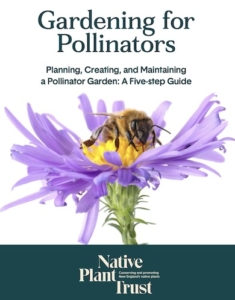 Gardening for Pollinators, an authoritative five-step guide by the Native Plant Trust, describes how to plan and plant an ecological garden that supports native bees, butterflies, beetles, hummingbirds, flies, and moths. Click image for this free 34 page pdf booklet.
 Native Plant Site Solutions for Backyard Habitat, booklet from URI Outreach Center. For professional landscapers and home gardeners. Includes how to analyze a site and a number of model planting designs coded for specific plants and their value for ecological services including attraction for birds and pollinators.

Native Plants for the Small Yard, a downloadable short book from LeHigh Gap Nature Center by Kate Brandes. Numerous suggestions and with easy to use design templates for small areas. e.g. corner garden, container garden, mailbox. Most of the specific plant suggestions are ones native to RI and NE.
Learn from the Experts
 As part of their mission to make resources on native plants and ecological landscaping available to as large an audience as possible, every year since 2015 Grow Native Massachusetts has professionally recorded numerous speakers from their Evenings with Experts lectures. All of the videos can be viewed on their website, free of charge. Truly an excellent resource.