RIWPS Annual Grants

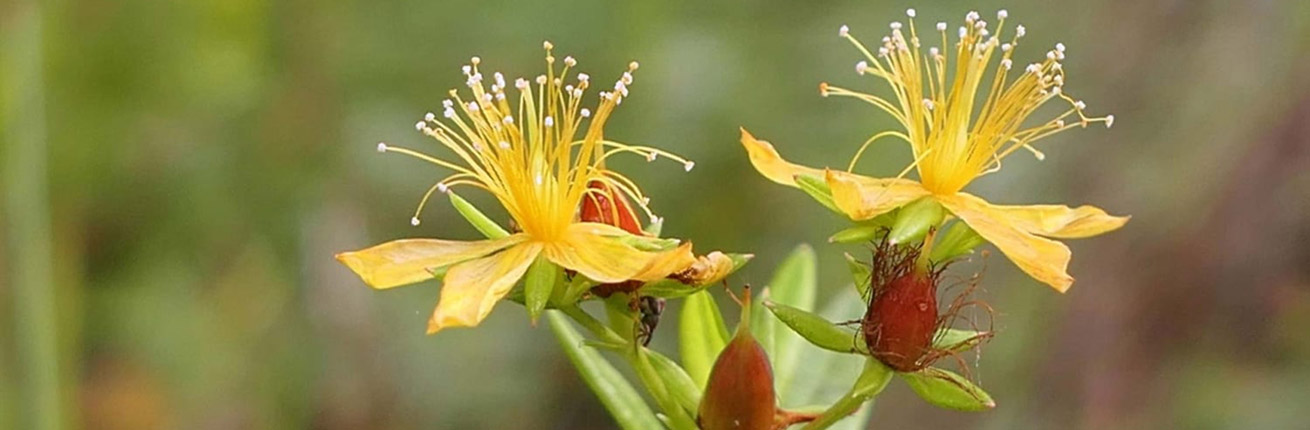
creeping St. John’s-wort, DMcGrady

  • Hypericum-adpressum-mobile

RIWPS Annual Grants

creeping St. John’s-wort, DMcGrady

Supporting local efforts to preserve and protect our native plants & their habitats

The Rhode Island Wild Plant Society offers annual grants for up to $2,500 to support individuals with projects related to  preserving and protecting our native plants and their habitats. To qualify you must be an educator, a member of a Rhode Island botanical or environmental association or a student in a field related to botany or environmental studies.

The project goal must involve environmental activities or research in any area of study related to native plants and/or their habitats. These activities may involve such things as installation of gardens, invasive removal, or support for extracurricular activities with a community outreach component. It can also be used for project materials, workshops or courses. An applicant must be a Rhode Island resident or a student at a Rhode Island educational institution. The Rhode Island residency does not apply to students.

Application Instructions

Applications accepted from January 1, 2026 until February 28, 2026.
Spotlighting a few of our grants!

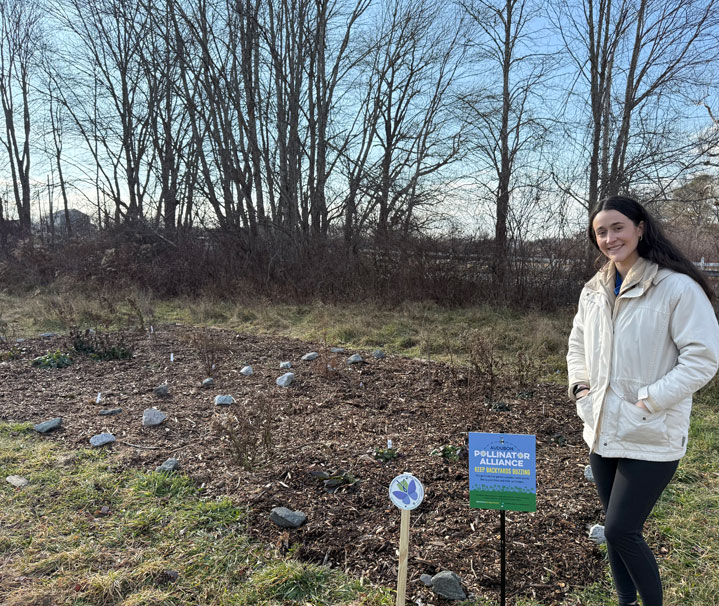
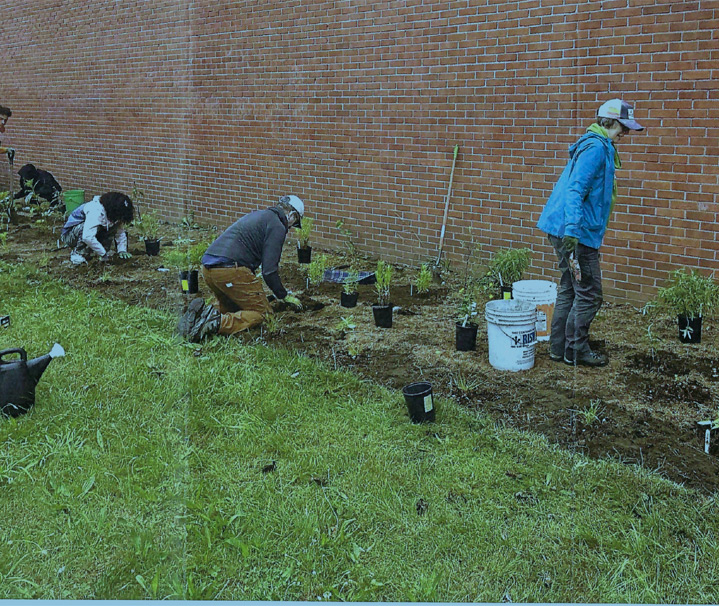
South Side Boys and Girls Club Pollinator Garden

A 1000 sq ft pollinator garden at Providence’s South Side Boys and Girls Club creates opportunities for nature-based play and education in this urban landscape.

• Purchased and planted ecotypic seeds from the Northeast seed collective and native plugs from the Native Plant Trust and larger plants from Butterfly Effect Farm.

• Used 24 different species, including butterfly milkweed, white wood aster, wild bergamot, foxglove beardtongue and black-eyed susan.

• Created a pollen-filled garden that provides sanctuary for pollinators, homes for local wildlife, and enjoyment for families in the community.

• Inspires community involvement in habitat creation and ecological conservation.

With the help of RIWPS grant funding, we transformed a forgotten strip of mowed lawn into a pollinator paradise. This garden provides students with the health benefits of time spent in nature, crucial ecological habitat for wildlife, and adds a joyful beauty to the community space. 

Katie Schortmann & Autumn Jencks [Organization affiliation: Audubon Society Rhode Island (ASRI)]

Transforming Warren: Native Pollinator Gardens 

Native gardens created as a part of a broader project to design and implement native gardens supports local biodiversity and educates the community of their value.

• Transformed two unused areas of land owned by the town of Warren into thriving, native pollinator gardens.

• Planted over 100 native species sourced locally, including from the RIWPS plant sale and Ed’s Prickly Patch, selected to bloom from April into October.

• Gardens provide habitat and food; pollen and nectar for pollinators, seeds and berries for birds, and leaves for caterpillars, beetles, small mammals and more.

• Serves as walkable spaces with signage and educational boards to encourage learning about the ecological impact of native plants.

Creating a safe, nurturing habitat for wildlife and seeing how quickly insects and pollinators gravitated to the gardens was incredibly rewarding. I am deeply grateful to RIWPS for the support that made this project possible and would encourage others to take on similar projects in their own communities.

Madison Pitre [Organization affiliation: Warren Land Trust (WTL)]

Feather Feather

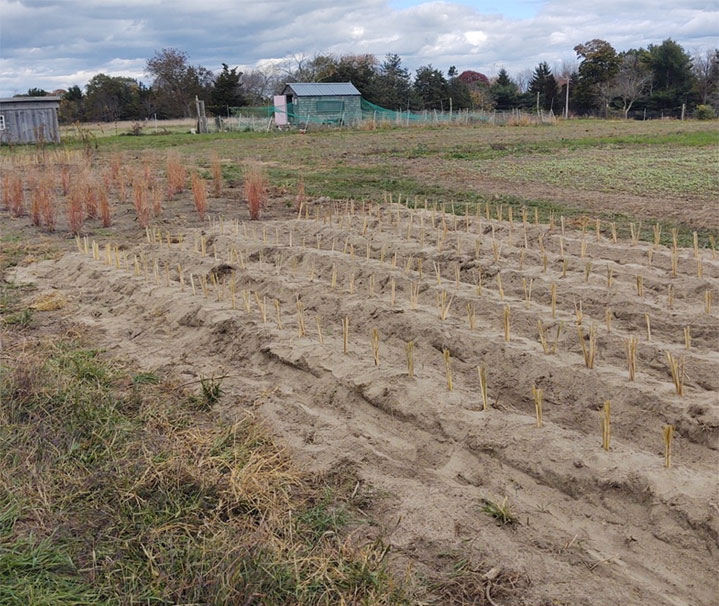
Jamestown Shoreline Resilient Garden 

An island-based initiative for an experimental incubator garden to cultivate and maintain native dune grasses and coastal buffer plants uses ecological practices and fosters community engagement.

• Planted 20 Coastal Little Bluestem (Schizchyrium scoparium), 40  Seaside Goldenrod (Solidago sempervirens), and 40 Bitter Panicum or Bitter Panicgrass (Panicum virgatum) on the farm.

• JCC contributed 1,350 bare root culms of American Beachgrass (Ammophila breviligulata Fernald) and Jamestown Public Work Department provided sand.

• Provides native coastal dune plants to restore and strengthen the resiliency of the dunes at Mackerel Cove and elsewhere on Jamestown.

• Creates a basis for educational outreach on vegetation and shoreline stewardship through workshops and community events.

This RIWPS grant has been “the little engine that could” that seeded the community-wide climate-resilient-and smart strategies.  The experimental incubator garden created by the RIWPS has been continuously maintained after being integrated into the RIDEM Ocean State Climate Adaptation and Resilience Fund (OSCAR) grant, another multi-entity collaborative initiative.  Establishing an island-wide public education platform has been ensured with the town’s new sustainability coordinator. My sincere gratitude to the RIWPS grant on behalf of the whole Jamestown community members. Thank you.

Susan Shim Gorelick [Organization affiliation: Jamestown Conservation Commission (JCC), in collaboration with Jamestown Community Farm (JCF)]

AgInnovation Pollinator Enhancement 

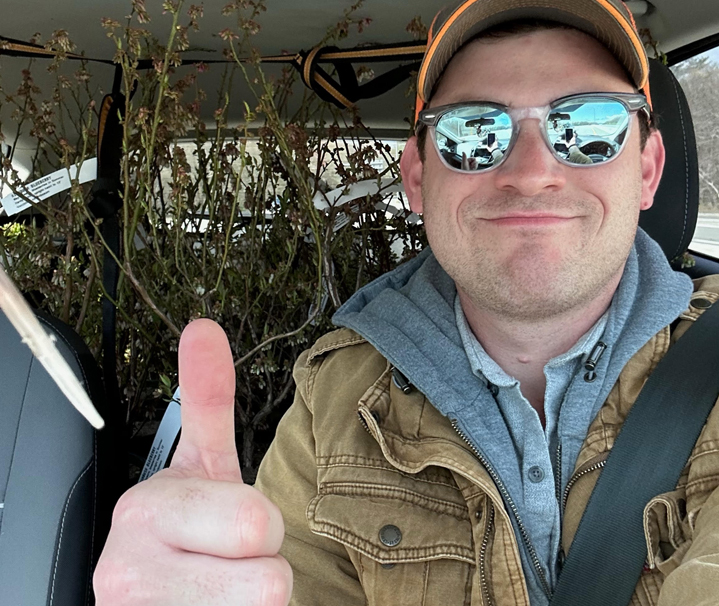
Native blueberry plantings at AgInnovation, a student driven community farm program, provide habitat for early spring pollinators, help crop development and increase the opportunity to donate more produce to underserved communities.

• Purchased and planted 40 native blueberry bushes (12 Highbush and 28 Lowbush) from Blue Moon Farm.

• Planted a 60-foot L-shaped hedgerow along a corner perimeter section of the Portsmouth AgInnovation Farm pollinator habitat

• Provides early flowers for pollinators and food for birds and local fresh produce to underserved members of the community.

Receiving this grant brought me great joy and excitement that I could share something very nostalgic to me with future generations. Growing up in the Pocono Mountains of Pennsylvania, I remember finding highbush blueberries in summer and just thinking it was the coolest thing on earth that I could wander the woods and find blueberries to eat. Every time a child walks along the pollinator trail at AgInnovation I hope they find that same sense of wonder!

Ryan Brancato [Organization affiliation: Eastern Rhode Island Conservation District (ERICD)]

Feather Feather

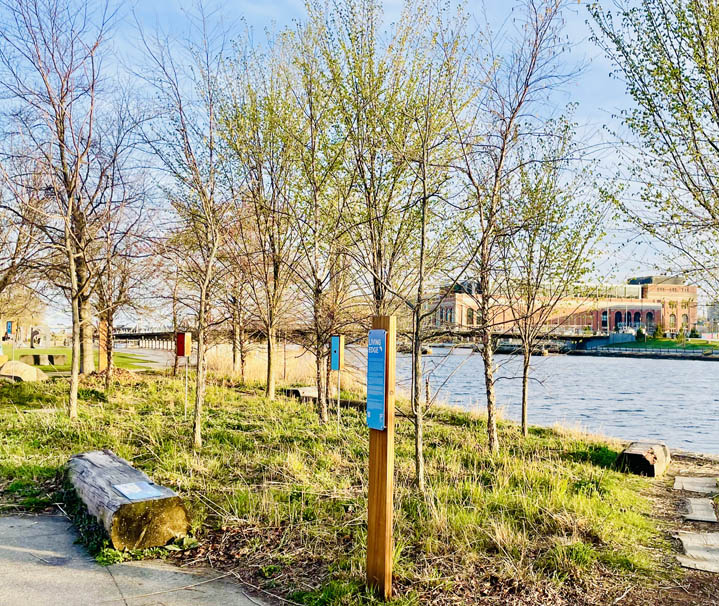
Signage for the Living Edge Park, Providence

A series of fun, colorful, educational signs heralds the ecological impact native plants previously planted in Living Edge, a city park along the Providence River.    

• Two large blue entry signs w/ a wood base, and five small educational signs installed

• Information provided about the design and implementation of the project, as well as educational information about the native plants

I designed and created the Living Edge in 2017 and have maintained it with the help of volunteers including my RISD students. Developing the signage was an incredibly rewarding experience that has allowed me to share my knowledge about native plant landscaping and rehabilitation with  the community.

Adam Anderson [Organization affiliation: Rhode Island School of Design]

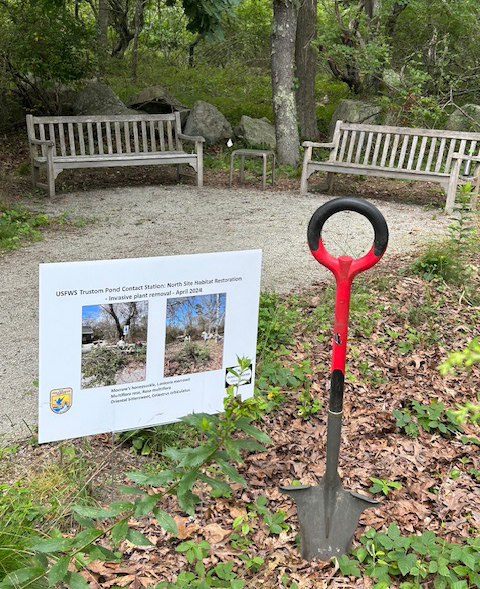
 Trustom Pond Refuge Rewilding Habitat Project

A collaborative project of URI Master Gardeners and US Fish and Wildlife offers thousands of annual visitors a welcoming resting stop to learn about restoration efforts.

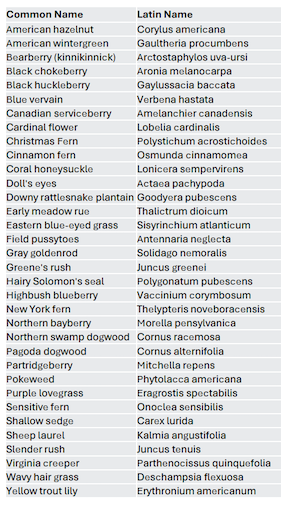
• Planted purchased native woody plant species, perennials and ferns along with native perennials sourced from the Trustom Pond/Kettle Pond winter sowing inventory.  Plant list

• Removed dense growth of invasives such as Morrow’s honeysuckle, multiflora rose,  Oriental bittersweet, tree climbing grape vine.

• Constructed an ADA compliant stone dust pathway and a functional rain garden to capture parking lot runoff water.

• Provides access to a natural observation area. 

The Rewilding Project created a significant improvement, for visitors, by permitting access to a natural observation area with wild flora and fauna. The new pathway leads to two wooden park benches under the shade of a grove of White Oaks, Quercus alba. The collaboration with URI Master Gardeners, USFWS summer volunteers and employees was a most enjoyable learning experience; from the site assessment planning, invasive plant removals, to the pathway/rain garden installations and plant introductions.

Mark Cordle [Organization affiliation: University of Rhode Island  Master Gardeners Program in partnership with host United States Fish and Wildlife Service]