
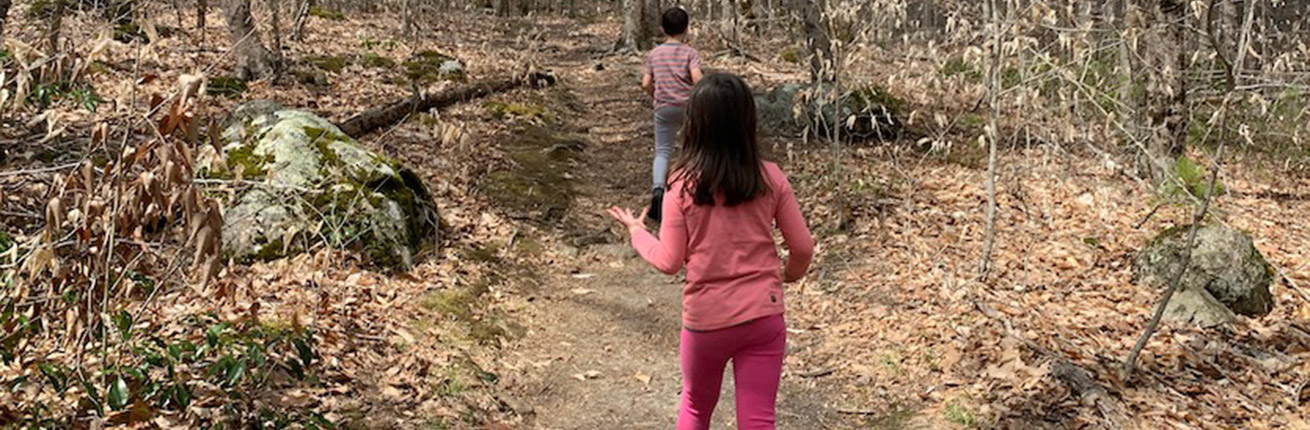

For children, let’s
♥ nurture their curiosity and awe of nature so they develop a strong relationship and deep connection to their natural environment.
♥ create opportunities for unstructured or loosely structured outside time to enhance their observational skills, creativity, mindfulness, state of well being, and physical development.
♥ foster shared moments with them in nature that they will always treasure.
See: Children & Nature Network and Richard Louv’s classic Last Child in the Woods: Saving Our Children from Nature Deficit Disorder
Tips for Positive Experiences
• Be realistic when planning adventures. It’s better to leave children wanting more.
• Let the children control the adventure as much as possible.
• Take precautions against sun exposure, ticks and other insects. Water and food are a must for extended time in nature.
• Walk gently and quietly, you will see more wildlife.
• Use all your senses. Be careful with touch. Plants and animals need to protect themselves. They may have thorns, stickers, stingers, toxins and skin irritants.
• Plants and animals are happiest and most useful in their environment. Take a journal with you so you can draw or write about what you see.
Some Suggestions
Activities
Nature: 25 Outdoor Adventures for Kids to Explore, Discover, and Awaken their Curiosity by Ainsley Arment
A guide for lovers of children and nature to encourage kids to get outside and draw, paint, play in the mud and even cook up some dandelions.
Plant related coloring
—A Walk through the Season with Native Plants by Rhode Island Wild Plant Society features 31 of our native plants.
—Among Rhode Island Wildflowers offers downloadable coloring pages from a historical collection of plants growing in Rhode Island (some native and others brought to Rhode Island from other places in the world) along with suggestions for other coloring opportunities
15 Minute Field Trips a Rhode Island based non profit offers a wide variety of excellent events for kids and families on the importance of the environment. Like RIWPS they are members of the RI Native Plant and Insect Community Network.
Journaling
Sketching Outdoors in Spring; Sketching Outdoors in Summer; Sketching Outdoors in Autumn; Sketching Outdoors in Winter; Drawing Nature by Arnosky, Jim.
This series of books teaches children how to draw what they see outdoors. (ages 7 and up)
Walks
The Rhode Island Families in Nature website includes a list of recommended hikes for families. You can search by name or county and the listings include the length of the hike and age recommendations.
Backyard Fun
Be a Nature Explorer: Outdoor Adventure Activities by Peter Wohlleben
Short book filled with outdoor nature activities for children. (ages 6 to 10)
Put on Your Owl Eyes : Open Your Senses & Discover Nature’s Secrets by Franklin, Devin.
Ideas for journaling, mapping and tracking in your backyard. (adult and child together)
Reference Resources
Nature Anatomy: The Curious Parts & Pieces of the Natural World by Julia Rothman
This illustrated introduction to our natural world includes the ground, the sky, flowers, insects, trees, mushrooms, animals and birds. A great starting place for young nature explorers. (ages 7 – adult)
Naturally Curious: A Photographic Field Guide and Month-by- Month Journey, through the Fields, Woods and Marshes on New England by Mary Holland
Holland offers a naturalist guide full of captivating images, facts and lore. A wonderful resource for any adult and in particular for adults welcoming young ones to observe and love the natural world.
Seek by iNaturalist app
Point the seek camera at living things to identify what you see on your explorations. There’s no registration and no data is collected.
Merlin Bird ID Guide from The Cornell Lab
Free global bird app with photos, sounds, maps and more.
Stories to Share
Can You Hear the Trees Talking, Discovering the Hidden Life of the Forest by Peter Wohileben. Based on the NY Times bestseller The Hidden Life of Trees, this interactive book introduces the mystery and magic of trees. (ages 8 – 12)
Fairy Dusters and Blazing Stars: exploring wildflowers with children By Suzanne M Samson, illustrated by Preston Neel. This beautifully illustrated children’s book presents literal interpretations of the common names of North American wildflowers. It is a wonderful way to introduce kids to basic plant identification. Has a picture glossary of wildflowers with scientific names, flowering time, range and habitat. While not specific to New England wildflowers, there many NE wildflowers included. (ages 6 – 10)
The First Blade of Sweetgrass: A Native American Story by Suzanne Greenlaw and Gabriel Frey. Musqon goes with her grandmother to learn how to gather sweetgrass, to continue the tradition of her Indigenous ancestors. (ages 5 – 9)
The First Strawberries, a Cherokee Story by Joseph Bruchac. A Cherokee legend that tells how strawberries came to be. (ages 4 – 8)
Hike by Pete Oswald. A father and child head out on a hike, keeping a family tradition alive. (ages 3 – 6)
Jack’s Garden by Cole Henry. Worms, insects and birds all find a home in the garden that Jack planted. (ages 3 – 6)
Listen to the Language of the Trees: A Story of How Forests Communicate Underground by Tera Kelley. A look at how trees communicate via an underground network. (ages 6 – 9)
Nature’s Best Hope: How You Can Save the World in Your Own Backyard (Young Readers Edition) by Doug Tallamy. An adaptation of Doug Tallamy’s introduction to conservation, ecology, biodiversity, and the impact of native plants. (ages 8 – 12)
Planting the Wild Garden by Kathryn Galbraith. People aren’t the only planters of gardens. Learn how seeds are dispersed by wind, water, birds, animals, plants and people. (ages 4 – 8)
Plants Can’t Sit Still by Rebecca E. Hirsch. Plants wiggle, creep, slither and turn to the sun and their seeds move even more in this story of seed dispersal. (ages 3 – 6)
Wildflowers, Blooms and Blossoms by Diane L Burns, illustrations by Linda Garrow. This take along field guide helps children identify different species of wildflowers. Includes directions for a variety of nature based craft activities and scrapbook collection ideas. (ages 7 – 10)
Wonder Walkers by Archer, Micha. Two young children wander and wonder about the world. (ages 3 – 5)