
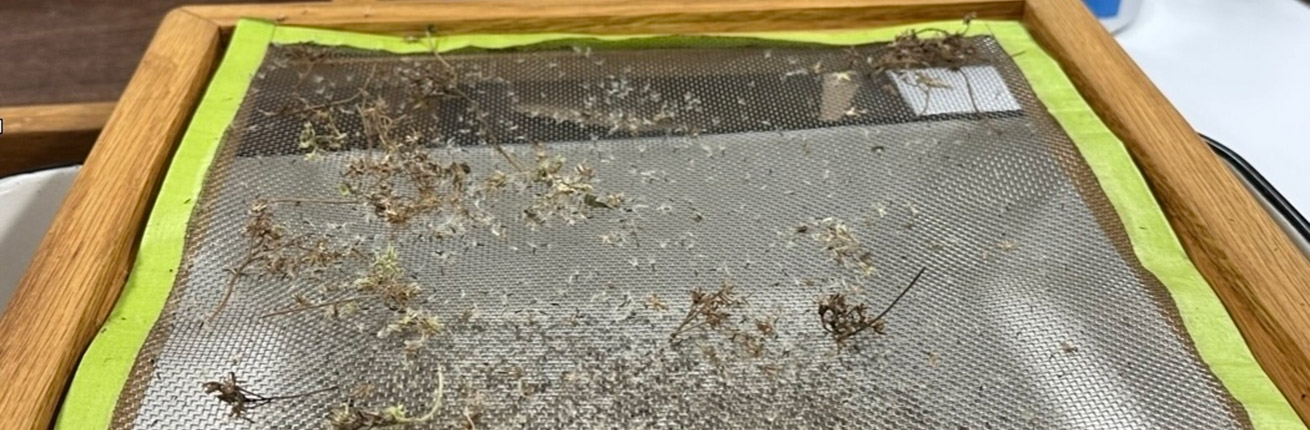
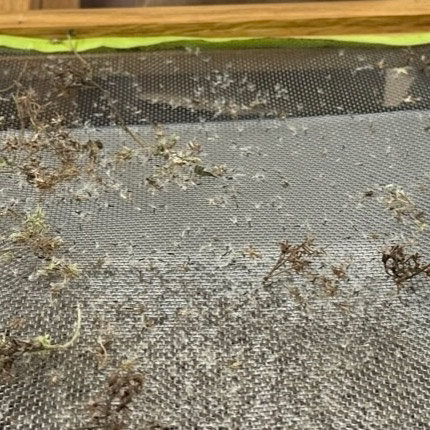
ReSeeding RI only focuses on species that tolerate dry storage. After seed materials from wild native plant populations are collected, they are put in brown paper bags to dry in a cool, dark location with low humidity. The goal is to minimize risk of moisture buildup leading to mold or rot and also to be able to reinspect for possible insect damage.
Seed Cleaning and Storage

Seed Cleaning Equipment
• Screens of varying sizes/gradients
• Everyday household items — mesh strainers, artist paint brushes, metal bowls
• White paper
• Labels
• Chip paint brushes (inexpensive paint brushes) to clean sieves between species
The Cleaning Process
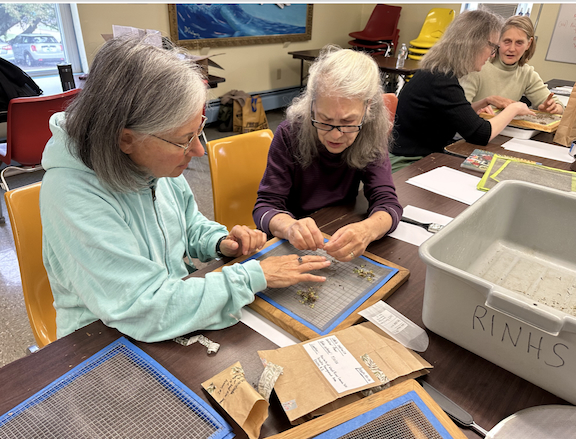
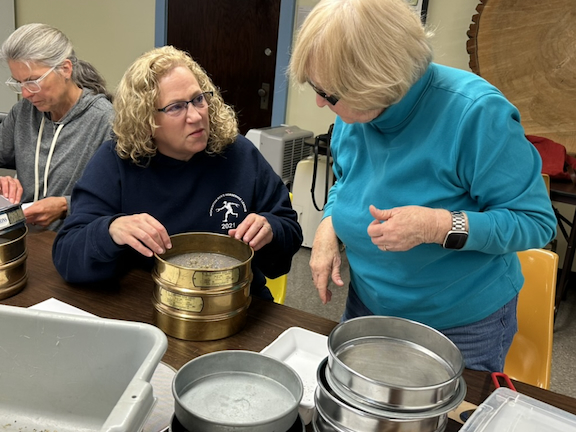
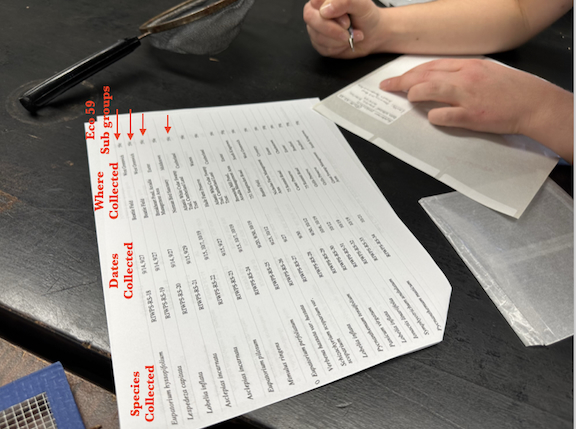
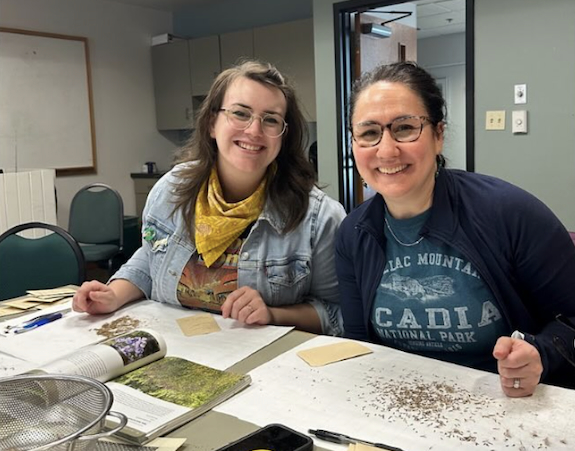
Our wild-collected seed is hand cleaned by our dedicated volunteers. We use a combination of different techniques to filter seeds through screens and sieves. Our species pages include images of the seeds of all our species. Seed images of many other native plants are available at the Native Wildflower Seed Gallery.
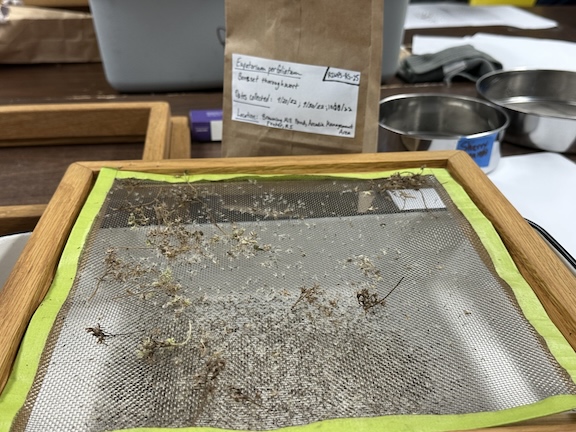
We rub the seed heads against the screens to release the seeds, shake the sieves to encourage seeds to fall out, and pass the seed through multiple screen and sieve sizes to remove as much extraneous material as possible. After passing the seed through a strainer or sieve, it can be helpful to place seed on a piece of paper, tip the paper downward, and tap on the undersurface of the paper. This process can further separate the seed from remaining material. After the seed is fairly clean, we sometimes pour the seed onto a piece of paper and manually separate the seed from the other material using fingers, a small artist paint brush, or the end of a pen.
Leaving some pappus and/or some debris is acceptable and will NOT affect the ability of the seed to germinate. In nature both of these just disintegrate in the soil.
Video: Seed Cleaning
Sue Theriualt, ReSeeding RI Steering Committee Chair, working with Prunella vulgaris (common selfheal)

Tips & Tricks for Cleaning Seeds of Different Species
Cleaning seed is an experimental process—finding what works best to clean one species of seed may not work for another!
- Asclepias incarnata (swamp milkweed)
The method used to collect milkweed seeds can greatly reduce the amount of “fluff” and the need to clean the seeds. Seed collection best occurs before the follicle completely opens and the white string (floss) expands. Open the follicle carefully, hold the floss with fingers of one hand and gently remove the seeds from the floss with the fingers of the other hand. (Helpful video from Save Our Monarchs Foundation.) Deposit seeds into a brown paper bag; these seeds are now clean and only need to dry before fridge storage!
Remember do not force a pod open that has not already naturally split. If the floss has already expanded to become “fluffy,” in the dry follicle, collect the entire follicle into a brown paper bag. During cleanning the seeds will then need to be manually separated from the fluff.
- Achillea millefolium (common yarrow)
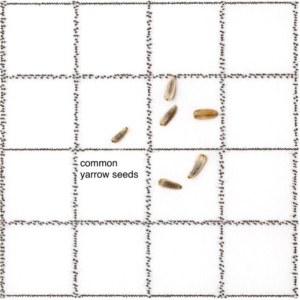
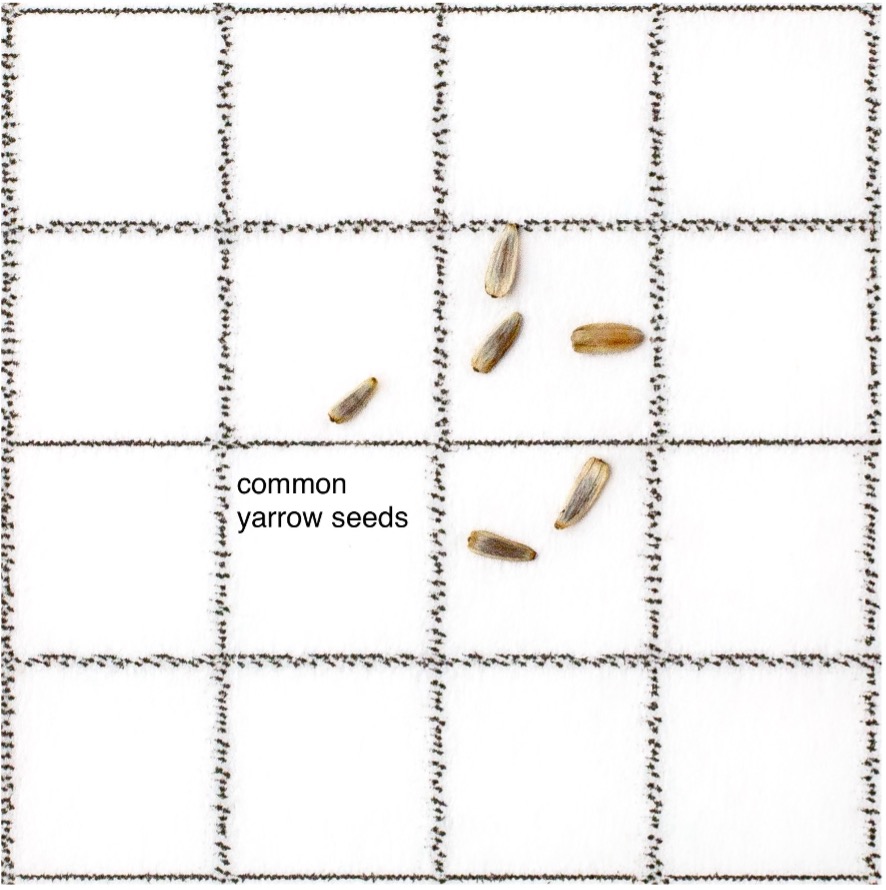
Yarrow seed is small and gray and can be difficult to distinguish from the surrounding plant material. Using sieves and screens of varying sizes can help separate much of the seed from the extraneous material. You can also use the paper and tapping the method to further separate the seed from the rest of the material.
- Eutrochium (Joe-Pye)
- Eupatorium ssp. (boneset)
- Solidago ssp. (goldenrod)
For seeds with considerable pappus, or “fluffy stuff,” attached to the seeds, it is best to use screens and sieves of different sizes to filter out as much extra material as possible. Our cleaned seed collections still typically contain considerable pappus.
- Lobelia cardinalis (cardinal flower)
- Lobelia spicata (pale-spiked lobelia)
These seeds can be easily released from their pods by opening the pod with your fingers and then sifting the seeds through a sieve (0.710 mm opening). This method should create very clean seed!
- Pycnanthemum muticum (broad-leaved mountain mint)
- Pycnanthemum tenuifolium (narrow-leaved mountain mint)
- Verbena hastata (blue vervain)
Many of these seeds will naturally fall out of the seed heads during dry storage. However, a lot of seed will remain stuck in the seed heads. To remove the remaining seeds, rub the seed heads against the sieve (0.710 mm opening). The paper and tapping method can further separate the seed from the rest of the material.
 Sorghastrum nutans (Indian grass)
- Andropogon glomeratus (bushy bluestem)
- Pancium virgatum (switch panicgrass)
- Deschampsia flexuosa (wavy hair grass)

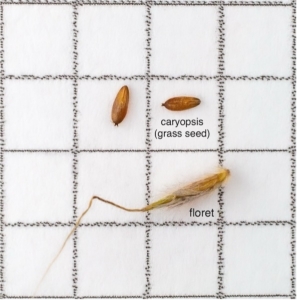
We use a method called “hand-stripping” to collect seeds for our native grass species. This collection method acts as a first-pass at cleaning the seed since it allows the collector to mostly collect spikelets and florets with minimal stems. Generally, the seeds of native grasses will store and germinate well with minimal cleaning. Make sure to remove any seeds of different species, as well as any stems and unwanted insects from the collection. It is not necessary to remove each caryopsis (grass seed) from its surrounding floret material. Ideally, you will have a cleaned collection of mostly florets.
- Vernonia noveboracensis (New York ironweed)
- Symphyotrichum undulatum (wavy-leaved aster)
We have found that it is easiest to clean New York ironweed and wavy-leaved aster by first pinching the pappus between thumb and index fingers and pulling to release the seeds from the flower bract material. If additional seed cleaning is required, use screens to further separate seeds from plant material.
Additional information
From the NY Botanical Garden – a one page summary of cleaning, drying and storing seeds