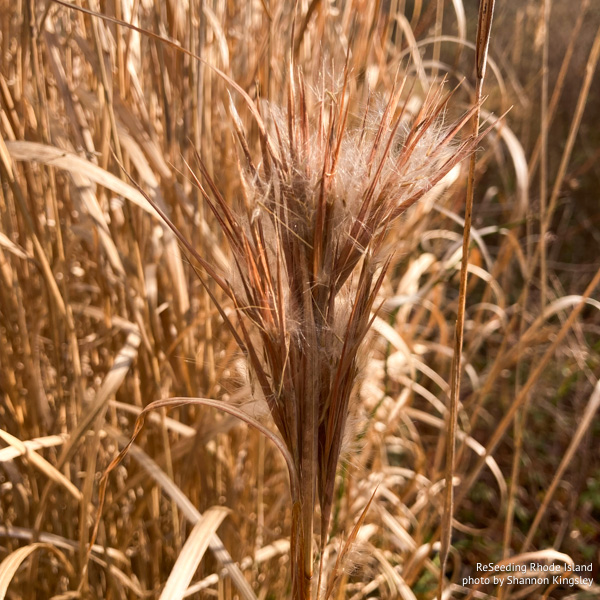
Growing Conditions: Full sun to part shade in medium to wet soil
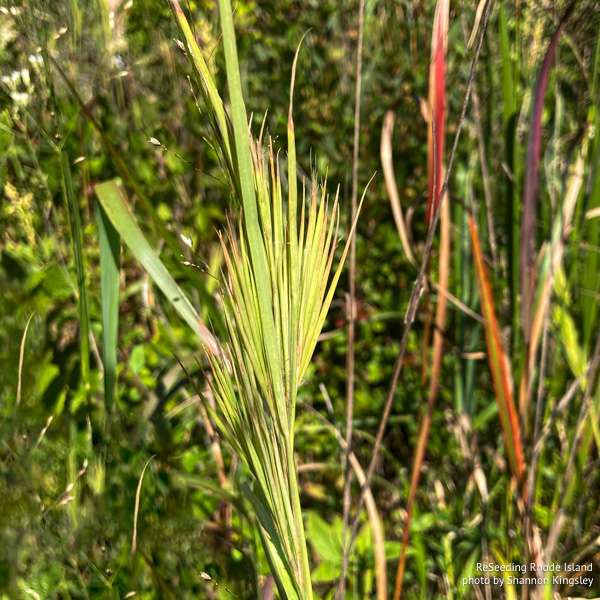
Size: Height 3-6 ft, Spread 2-3 ft
Blooms: September to October
Landscape Use: Seasonally-wet area, naturalized area
Habitat Value: Provides habitat for overwintering insects and a food source for songbirds and small mammals. Serves as the host plant for various moth species, including the common wood-nymph (Cercyonis pegala), the cobweb skipper (Hesperia metea) and the common roadside-skipper (Amblyscirtes vialis).
Pests & Diseases: None
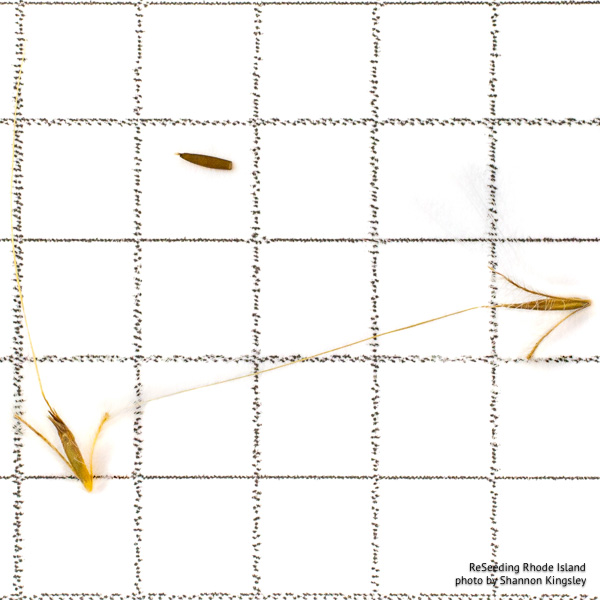
Mature Seed Color: Brown
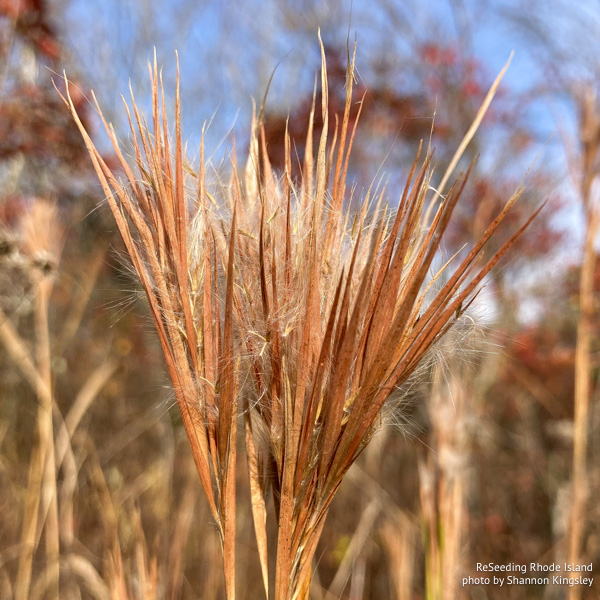
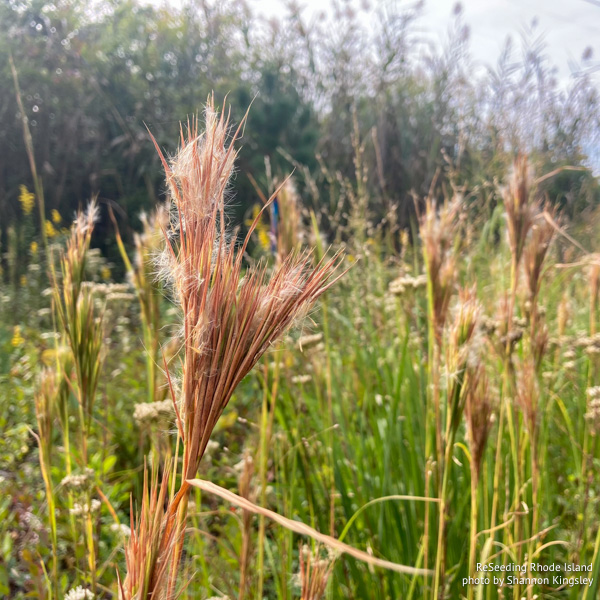
Collect seeds from October to November when seed heads are dry and fluffy. Run hand along inflorescence (called “hand-stripping”) and pull gently, gathering a handful of seeds. Place them in a paper bag.
Collection & Cleaning Tips: Ensure the seeds are free of insects and significant amounts of extra plant material. For grass seeds, it is not necessary to remove all the plant material surrounding seeds.
Store clean, dry seeds in a refrigerator (40°F) in a sealed glassine envelope.
Germination Requirements: These seeds need a winter or cold period to germinate — a minimum of 30-60 days exposed to temperatures in the range of 40°F and below. Plant in moist soil mixed with sand. Sow outdoors in pots November through February.