Growing Conditions: Part shade in dry to medium soil
Size: Height 1.5-2.5 ft, Spread 1-1.5 ft
Blooms: April to June
Landscape Use: Naturalized area, border plantings
Habitat Value: Attracts an array of host insects, including the common buckeye butterfly (J. coenia), the chalcedony midget moth (E. chalcedonia), and the Baltimore checkspot buttferly (E. phaeton). Provides nectar to various pollinators, including bumble bees (Bombus), small carpenter bees (Ceratina), and mason bees (Osmia and Hoplitis).
Pests & Diseases: Minor issues of leaf spot, rust, and root rot.
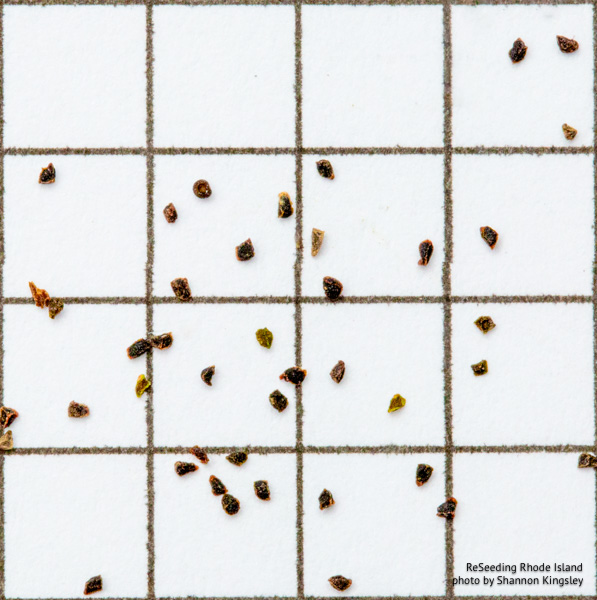
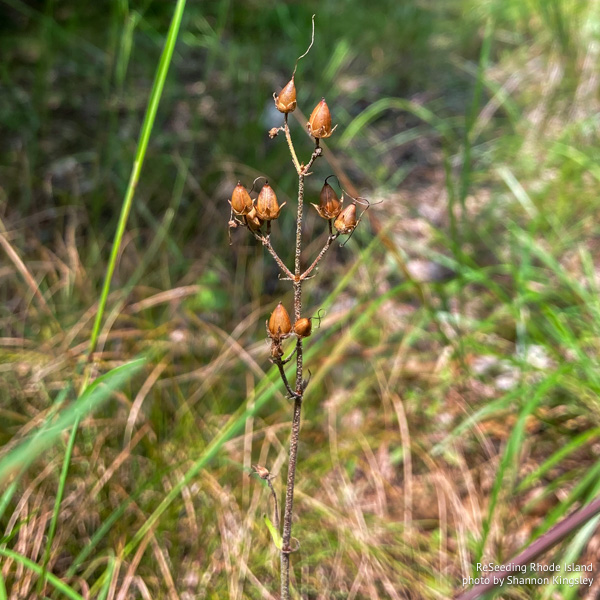
Mature Seed Color: Dark brown
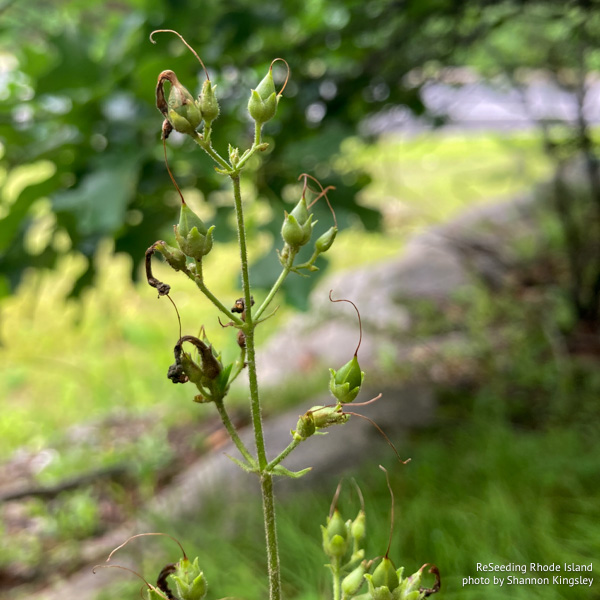
Use a small brown bag to collect seeds from July to August when the seed heads have turned brown and the seeds are easily released from the seed heads. Clip seed heads over the brown bag.
Collection & Cleaning Tips: Since the seeds are very small, use small brown paper envelope bags to collect seed heads. Tip seed head down to empty out the seeds.
Store clean, dry seeds in a refrigerator (40°F) in a sealed glassine envelope.
Germination Requirements: These seeds need a winter or cold period to germinate — a minimum of 30-60 days exposed to temperatures in the range of 40°F and below. They also need light to germinate so plant on the surface of moist soil mixed with sand. Sow outdoors in pots November through February.