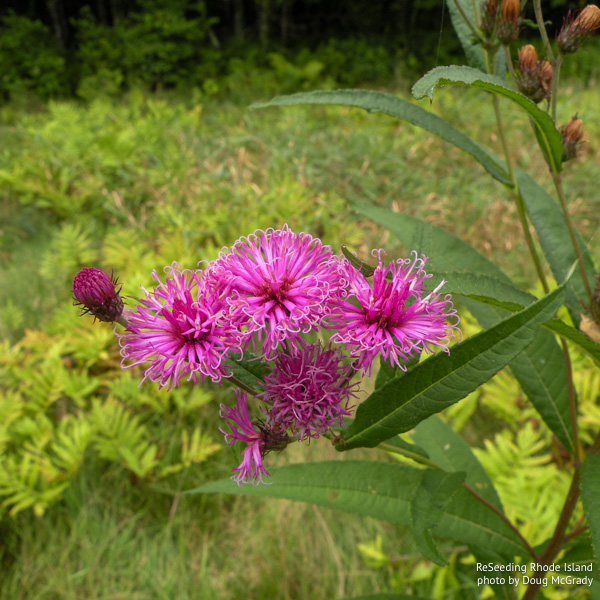
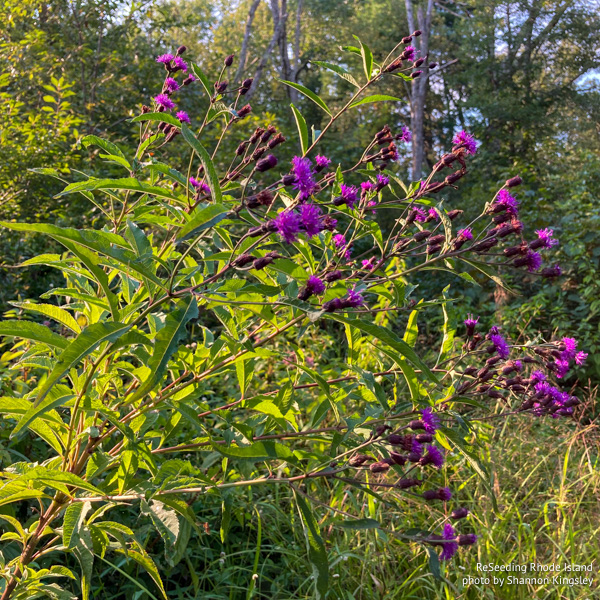
Growing Conditions: Sun to part shade in moist to dry soil
Size: Height 4-7 ft, Spread 3-4 ft
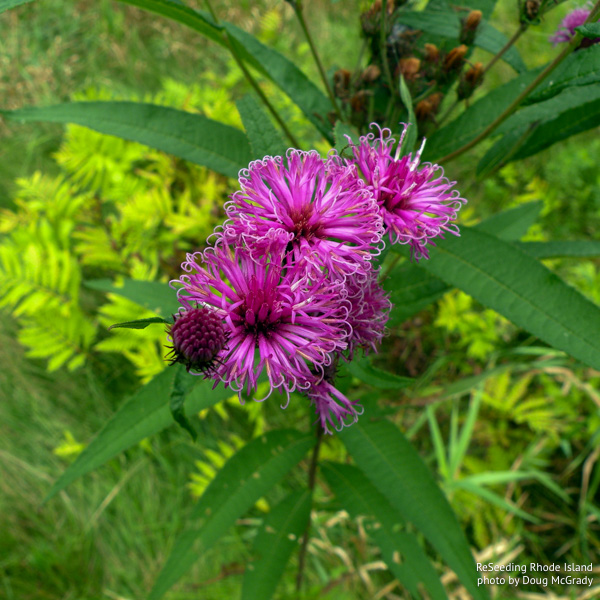
Blooms: August to September
Landscape Use: Naturalized area, seasonally-wet area. Tip – Prune back by ½ to ⅓ in mid-spring to reduce height and increase bloom. At full height best placed in the back of a home garden.
Habitat Value: A variety of pollinators and host insects, including the denticulate longhorn bee (specialist), the wavy-lined emerald moth (host), and the Parthenice tiger moth (host).
Pests & Diseases: None
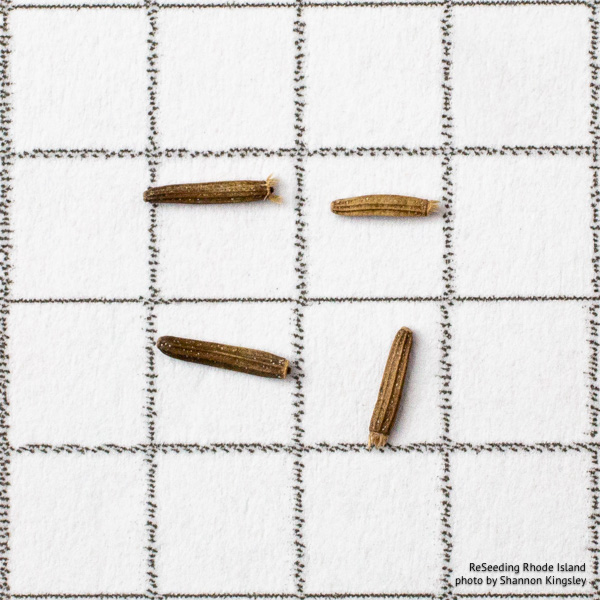
Mature Seed Color: Brown
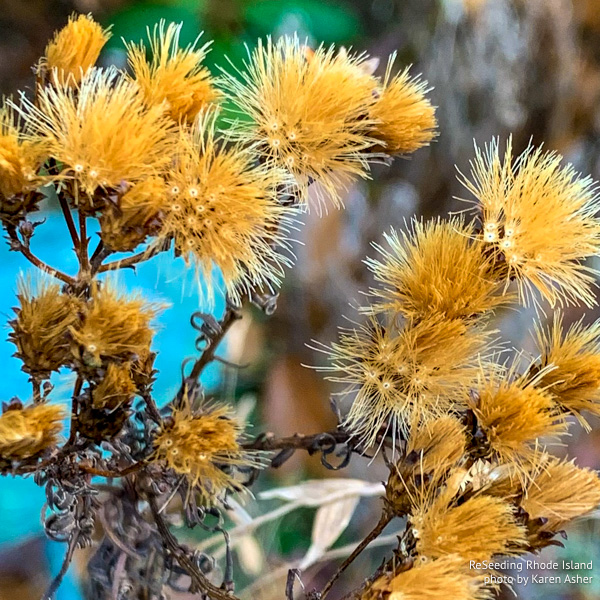
Use a brown bag to collect seeds from August to October when the tan pappus (tiny hairs in the shape of a parachute that aid in wind dispersal) is fluffy (about one month after blooming). Clip seed heads and place upside down in the paper bag.
Collection & Cleaning Tips: Pinch pappus between thumb and index fingers and pull to release seeds from flower bract material. Remove as much pappus as possible. Use seed cleaning screens to separate seeds from plant material.
Store clean, dry seeds in a refrigerator (40°F) in a sealed glassine envelope.
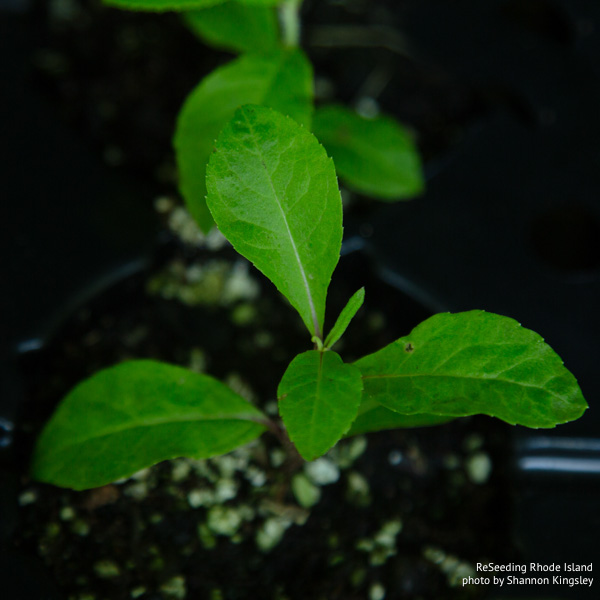
Germination Requirements: These seeds need a winter or cold period to germinate — a minimum of 30-60 days exposed to temperatures in the range of 40°F and below. Plant in moist soil. Sow outdoors in pots November through February.