

My winter sown native plant seeds are sprouting. What should I do now?
Some general guidelines – from sprouting to planting in the ground
Delight in the little green sprouts. Watch them turn into seedlings as you see true leaves emerging. In the next few weeks more may germinate. A plant’s genetics and a variety of environmental factors such as the location of your seed containers, sun exposure, winter temperatures, and even the type of container you used, determine the time frame of a seed’s germination.
Be patient. Continue to nurture your seedlings as they develop into plants with strong root systems. Strong root systems are key to their survival in your landscape.
- Water them to prevent them from drying out.
- Keep them sheltered from harsh weather.
- Keep them in an area where they don’t get full sun exposure.
- Consider diluted liquid fertilizer.
Appreciate the joy in the journey.
What does a strong root system look like?
A strong root system has a number of branching roots – some 3 to 5 inches
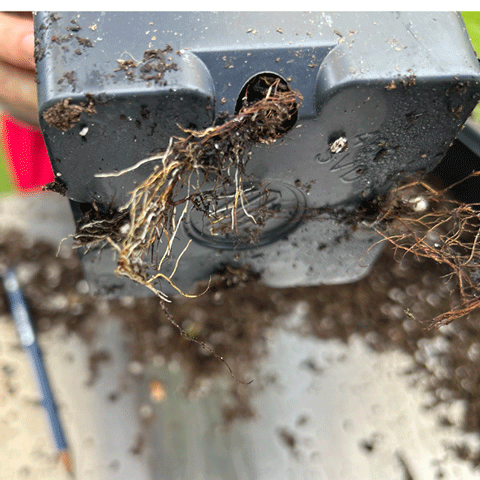
Roots emerging from the bottom of a 4 inch pot
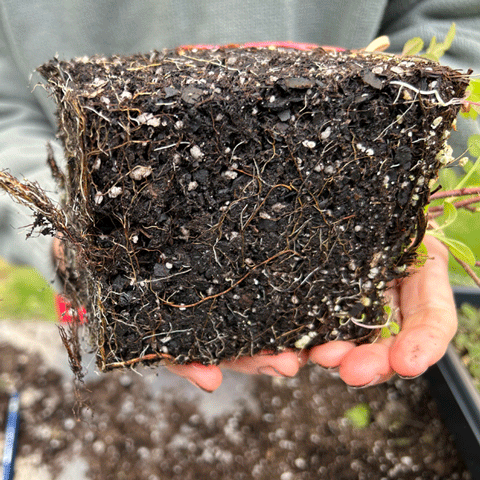
A view of the root system from that 4 inch pot
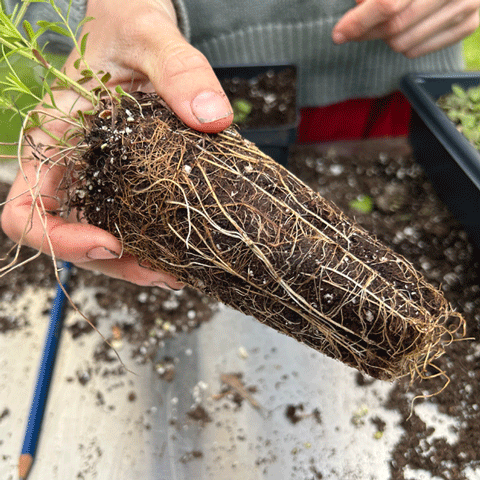
Root system of a plant from 5 inch cell tray
From Seedlings to Plants in Your Landscape: 2 Possible Courses of Action
• Leave your seedlings in their original container to grow into plants with well developed root systems and then plant directly in the ground.
This option works well only when there is sufficient soil in the container to allow the roots of the growing plant to to spread out and lengthen. It also works best for containers where the seeds were not too densely sown.
• Transplant your seedlings from their original container into 4-5 inch pots when they have 2 or more true leaves. Use fresh potting soil, not garden soil. Its light texture allows roots to spread easily, contains added nutrients, drains well and is weed free.
This option works well for seedlings growing densely. Depending on your landscape conditions, this repotting method could be a more convenient way for you to nurture your growing plants.
Repotting Tips
- For densely sown seeds use the “hunk of seedlings” method.
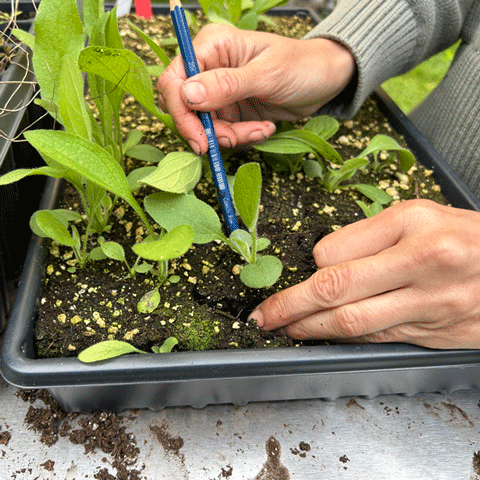
In a pot of loosely packed, moist organic potting soil, use your fingers, pencil or similar object to make a hole in the center that is large enough to accommodate the roots of the seedlings.

Use a pencil or blunt knife to gently cut a small hunk of seedlings, about 1/2 to 1 inch square, from the original container. Do not worry about separating the individual plants or even counting them. As in nature, the strongest seedlings will survive!
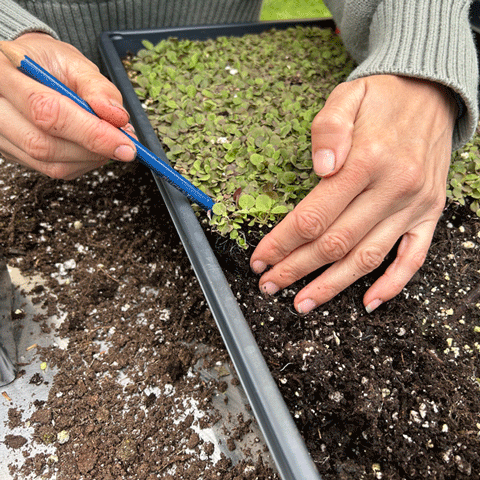
Gently remove the hunk of seedlings from your container.
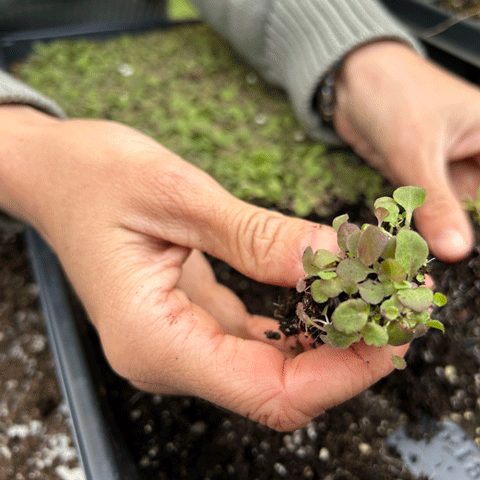
Place the hunk of seedlings into the hole. Gently tap the soil around the seedlings. Gently spray with water to settle the soil around the seedlings.

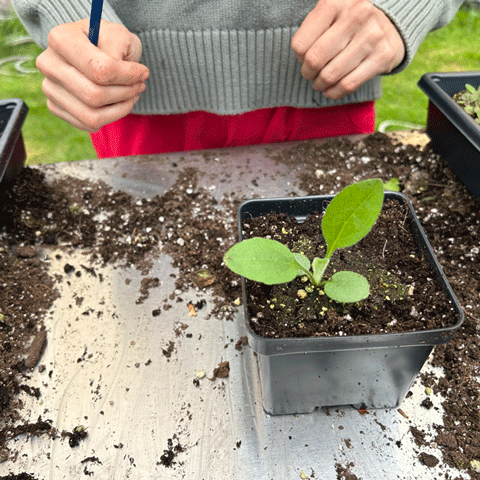
2. Some seedlings, especially those that are taller or not sown densely, can be separated easily. In these cases, plant 1 – 4 individual plants in a 4 to 5 inch deep pot. Use larger pot for taller plants and multiple seedings so roots have room to spread.
Click here to add your own text
Click here to add your own text
What to do after I put the plants in the landscape?
All plants need to be watered when they are initially added to the landscape in order to acclimate to their new location. Water immediately, then every couple of days for the first few weeks and then taper off watering based on the water needs of the specific species.
- Water more frequently if temperatures are particularly high. Remember soil temperatures are warmest in July and August.
- Consider feeding plant once a week, ½ dilution of liquid fish emulsion for the first few weeks.
Most commonly asked questions
• How long does it take for a seedling to grow into a plant with a strong root system?
Root development is a gradual, continuous process determined by the plant species, weather and specific growing conditions at your location. Some may be ready in late spring and others not until much later in the summer.
A very good option is to wait until early fall to put your plants in the landscape. Cooling soil and air temperatures, along with fewer emerging weeds make fall an ideal time for planting.
Note: RIWPS times its Fall Native Plant Sale (September 6, 2o25) so that our winter sown seeds have very well-developed root systems and you can take advantage of fall planting conditions!
• Do the some of the roots of my plants really need to be 3 to 5 inches long before being planted in the landscape?
Plants want to live. Some may survive even with less developed root systems. Watering and protection then from pests and weeds will also increase their chances of survival. Consider mixing potting soil into landscape soil when you plant.
• What happens if the plants in my original containers or my repotted plants get “root bound”, have too many roots in proportion to the soil?
As plants depend on nutrients in the soil, root bound plants weaken due to lack of nutrients. Leaves turning yellow or red can be a sign of a lack of nutrients. In root bound plants the roots begin to encircle the interior of your pot or container, or begin growing in the direction of the top of the pot or container in search more nutrients. Whether you opt to put your plant directly in the ground or repot, loosen encircling or upward-growing roots and reposition them outwards and downward as you put them in the soil to encourage them to spread.
• If I repot, can I use pots that are not 4-5 inches deep?
For most native plant species 4-5 inch deep pots accommodate a well developed route system. Using larger pots however is fine especially, for larger plant species that you will plant in the fall. A larger pot can avoid root bound plants. For small native plant species 3 inch deep pot might be sufficient.
Other more specific questions
• I sowed my seeds in containers that have covers. Should I remove these covers?
Yes. Plastic containers with vented covers, e.g. gallon milk jugs, plastic salad containers, offer protection from pests, help retain moisture and provide insulation from wind and cold. When temperatures begin to rise to the 60’s and 70’s, remove these covers to prevent seedlings from overheating.
• What kind of pen or marker is best to use for labeling plants?
There are garden pens you can purchase for this reason. Pencils or oil-based pens are good but not as long lasting as garden pens. Laser printed labels on water proof labels also work very well.
• Should I fertilize my seedlings and plants?
While not required, using a mild natural fertilizer such as fish emulsion can help encourage growth.

