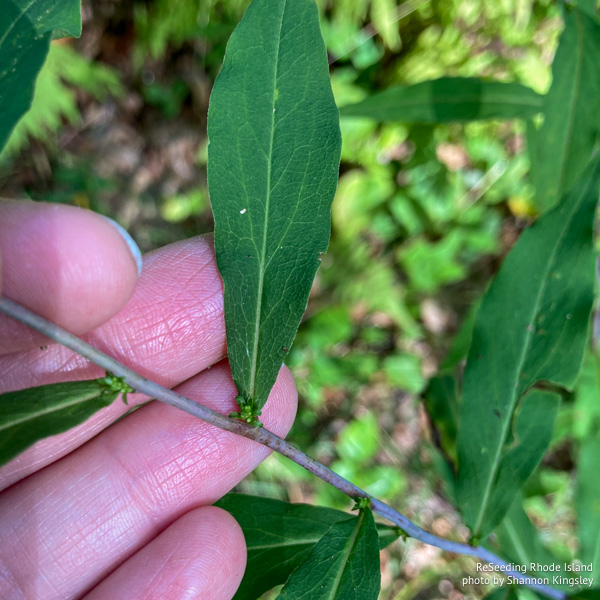
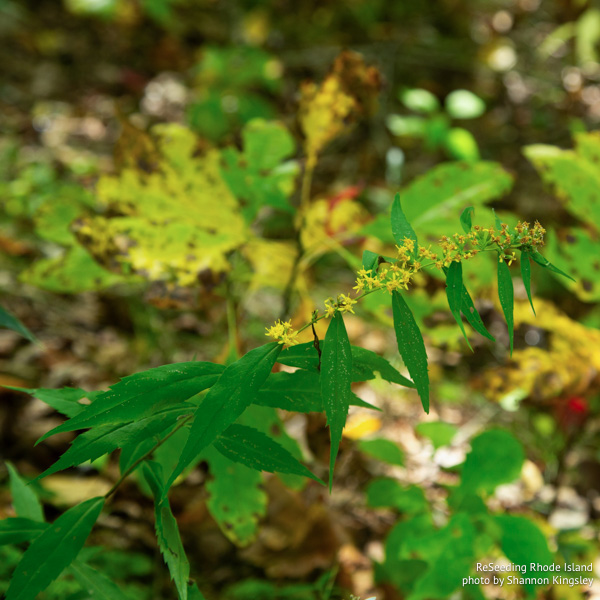
Growing Conditions: Sun to part shade in moist to average soil
Size: Height 1-3 ft, Spread 1.5-3 ft
Blooms: September to October
Landscape Use: Meadow, naturalized area, border plantings
Habitat Value: Attracts various pollinators, including miner bees (Andrenidae), plasterer bees (Colletidae), and bumble bees (Bombus). Solidago species are a vital host plant for numerous species, including the wavy-lined emerald moth (S. aerata), the green leuconycta moth (L. diphteroides), and the goldenrod hooded owlet moth (C. asteroides).
Pests & Diseases: Potential minor issue of rust
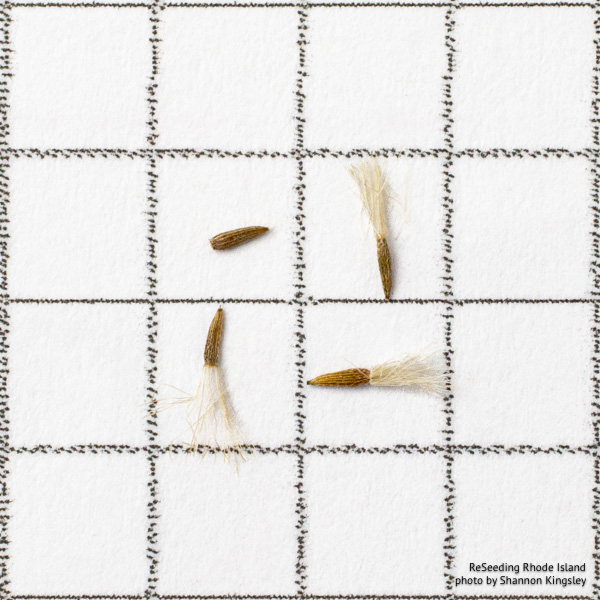
Mature Seed Color: Tan/dark yellow
Use a brown bag to collect seeds from November to December when the seed heads have turned brown and the pappus is fluffy. Clip seed heads and place upside down in the paper bag.
Collection & Cleaning Tips: Pinch pappus between thumb and index fingers and pull to release seeds from flower bract material. Remove as much pappus as possible. Use seed cleaning screens to separate seeds from plant material.
Store clean, dry seeds in a refrigerator (40°F) in a sealed glassine envelope.
Germination Requirements: These seeds need a winter or cold period to germinate — a minimum of 60 days exposed to temperatures in the range of 40°F and below. These seeds need light to germinate so plant on the surface of moist soil mixed with sand. Sow outdoors in pots November through February.